

How to Start Digital Planning: The Complete Beginner's Guide
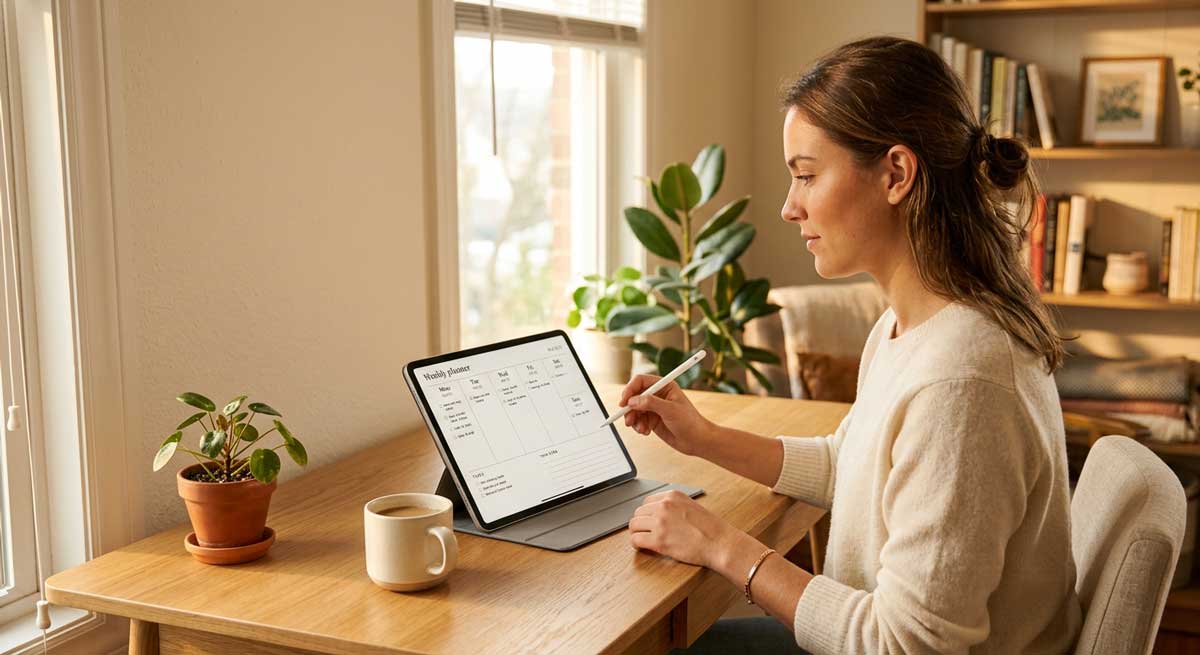
Most people who try to start digital planning get stuck on the wrong question. They spend weeks comparing iPads, styluses and apps, then abandon the planner in February. The device is not what makes digital planning work. The habit of sitting down, deciding what matters and writing it by hand is what makes it work.
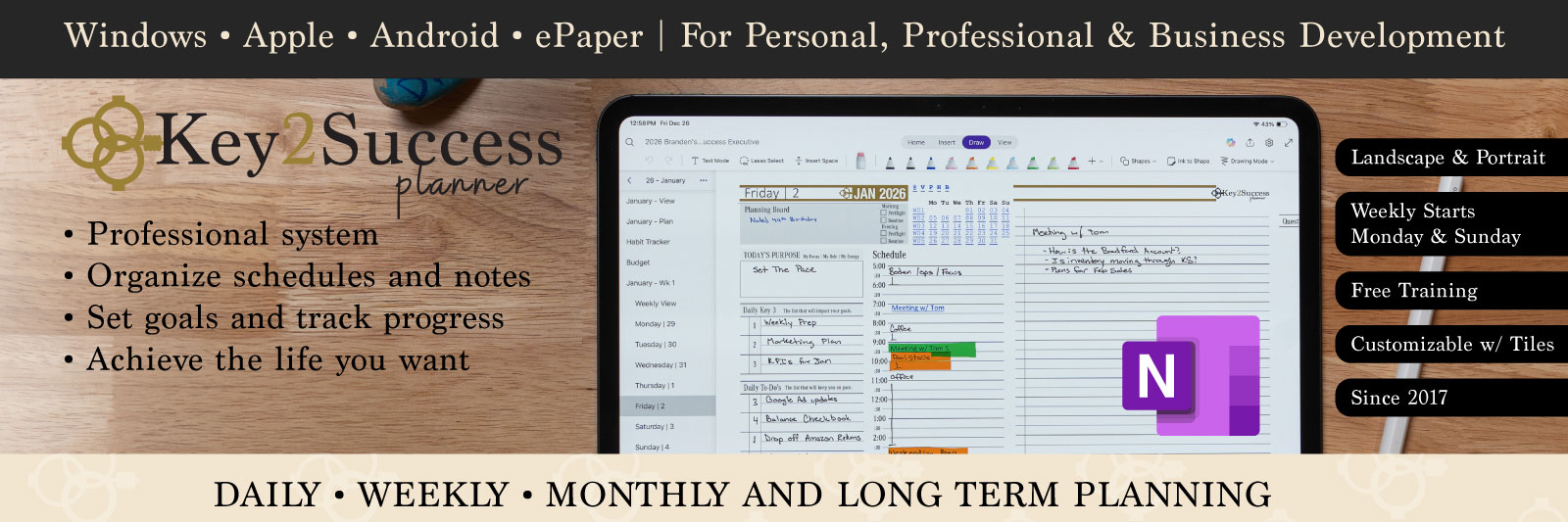
I have planned on paper since my Franklin Covey days in the 1990s, and I have built the Key2Success digital planner since 2019. More than 24,000 people now use the system on Windows, Apple and Android devices. This guide is the same advice I give every new customer: start with the device in front of you, set up once, and protect a short weekly planning session.
Here is my position up front: you should not try to automate your success. Apps that promise to plan your day for you are the reason so many capable people feel less productive than they did twenty years ago. Digital planning works because it keeps you in the driver's seat.
Key2Success users planning across Windows, Apple, Android and e-ink devices.
Minutes for a weekly planning session. That is the whole foundation.
Daily priorities, the "Key Three," that actually move the needle each day.
What is digital planning?
A digital planner is not a calendar app or a task manager. Calendar apps tell you where to be. A planner helps you decide what is worth doing. A good digital planner mirrors a paper planner, with yearly, monthly, weekly and daily pages connected by tabs and links, so you move through it the same way you would flip pages.
The handwriting part matters. A 2024 high-density EEG study published in Frontiers in Psychology found that handwriting produced far more widespread brain connectivity than typing. When you write your plan with a stylus, you connect your thinking and your hands to the goal in front of you. That is the part of paper planning worth keeping.
A digital planner is a paper planner that you can search. That one difference is why I switched.
What you need to start digital planning
You need three things: a device, an app that runs on it, and a planner file built for that app. A stylus helps on tablets but is optional on a computer, where you can type or use a touchscreen. Start with the column below that matches the device you already own.
| Device you own | Best app to start | Why it works | Planner |
|---|---|---|---|
| Windows laptop, Surface or desktop | Microsoft OneNote | Free, syncs to iPad, Mac, Android and phone. Type or handwrite. | OneNote planners |
| iPad, Mac or iPhone | GoodNotes, Noteshelf, Notability or OneNote | Excellent Apple Pencil handwriting. OneNote if you also use Windows. | GoodNotes and PDF planners |
| Samsung Galaxy Tab or Galaxy phone | Samsung Notes or OneNote | S Pen handwriting built in. No extra app purchase. | Samsung Notes planners |
| reMarkable, Supernote, Onyx Boox or other e-ink tablet | The device's own notebook app | Paper-like writing, no notifications, all-day battery. | reMarkable and e-ink planners |
If you are unsure which combination fits, the two-minute Key2Success Planner Finder asks which devices you use and recommends the app and planner that will sync across them. For a deeper look at the apps themselves, see choosing the right application for your digital planner.
How to start digital planning in 6 steps
- Choose the device in front of you. Learning a new device and learning a planning habit at the same time is two hurdles. Remove one. The laptop, tablet or phone you already use every day is the right place to start.
- Pick the app that runs on that device. Use the table above. If you want the same planner on Windows and Apple, choose OneNote. If you live on an iPad, choose GoodNotes or Noteshelf.
- Choose your planner edition. Personal and Professional cover daily, weekly, monthly and goal pages. Business and Executive add deeper planning tools for leaders. Compare the editions side by side before you buy.
- Install on one device first and let it sync. Follow the install guide for your app, below. Wait until the planner has fully synced before you open it on a second device. Adding three devices at once is the number one cause of setup problems we see.
- Run your first weekly planning session. Open the weekly page, reflect on the week behind you, list what you want to achieve next week, then rank it. Give yourself 15 to 20 minutes.
- Write your Key Three every evening. Before you close the day, pick the three things that will make the biggest impact tomorrow and write them on the daily page. That is the entire daily habit.
The weekly and daily rhythm that makes digital planning stick
The planner is only as good as the rhythm you build around it. Here is the exact rhythm I use, and the one I teach in coaching sessions.
End of week: the 15 to 20 minute weekly plan
At the end of each week I sit down with my weekly planning page. I reflect on what happened, organize my thoughts on what I want to work toward next week, lay out a grid of what I want to achieve, and then prioritize it. That session takes 15 to 20 minutes. The weekly page is the foundation. It names what is critical this week and, just as important, what I am choosing to let go of.
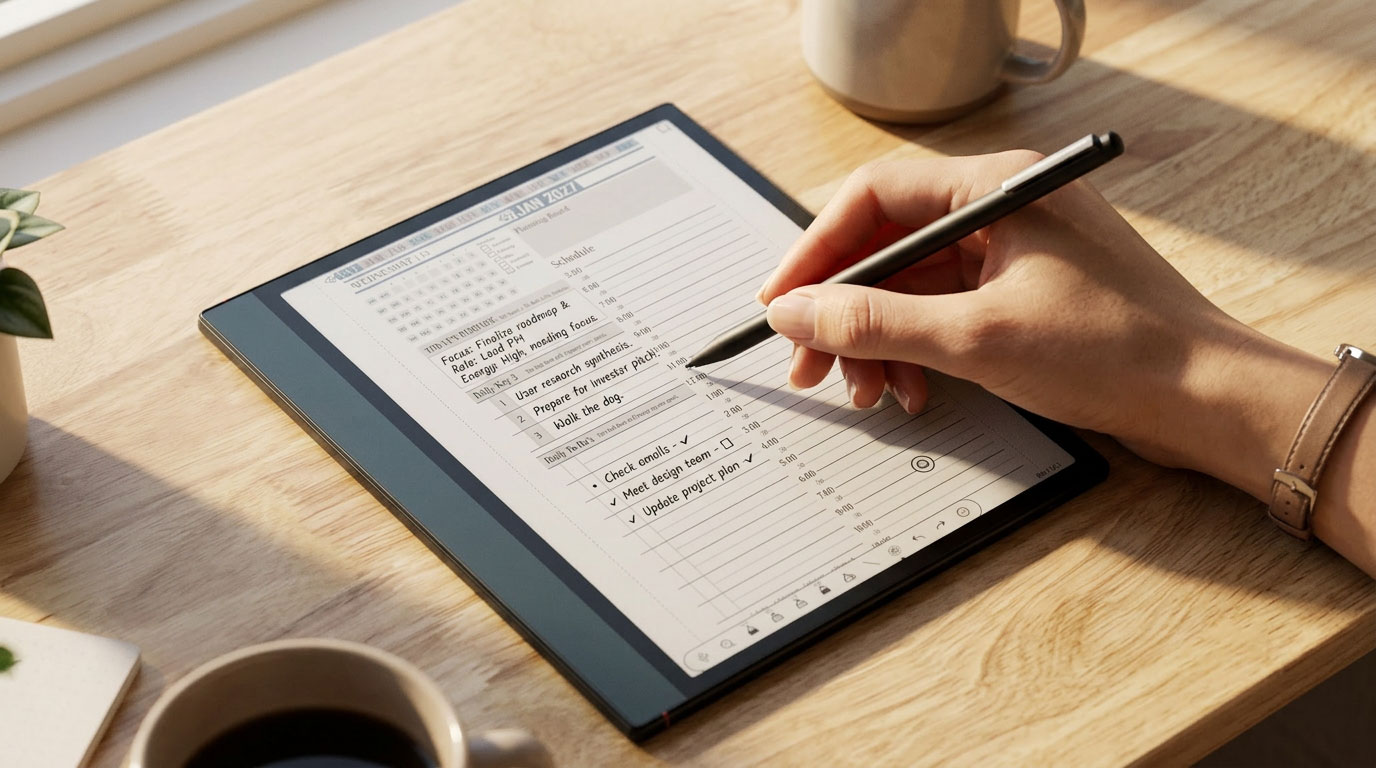
Every evening: the Key Three
A few minutes each evening, I reassess priorities and write my Key Three for the next day on the daily page. Three things, not twelve. James Clear popularized the math in Atomic Habits: get one percent better each day for a year and you end up about 37 times better. The Key Three is how you get that one percent on purpose.
Every year: the four cornerstones
Annual planning in Key2Success is built on four cornerstones: self, relationships, community and career. Career gets its own section because so many people define who they are by what they do, and separating it lets you ask what you want to succeed at personally. Relationships matter because the right people help you reach goals you cannot reach alone. Community matters because when you enrich the lives of people around you, you enrich your own.

I have been a Franklin Covey user since the 1990s, and paper planning has always been the root of my success. In the early 2010s I assumed calendar and scheduling apps were the natural evolution. They were not. My lack of real planning was holding back my potential. In 2017 I went back to paper with the Full Focus Planner, and within about six months I saw traction again. By the end of 2018 I also had a stack of notebooks on my desk and no way to search them. I tried a collection of note-taking apps, but they had no structure. So in 2019 I built one: a hyperlinked planner I could handwrite in OneNote on a Microsoft Surface, with every note searchable. That became the Key2Success planner, and today I still plan in OneNote on Windows and Apple devices because it is what I know best.
Common beginner mistakes (and how to avoid them)
1. Expecting the planner to plan for you
The most common thing I hear from new customers is an expectation of automation. A planner does not create your success. You do, by deciding what matters and putting first things first. A task list is not a plan.
2. Installing on every device at once
Install on one device, let it finish syncing, then add the next. Most setup tickets come from skipping this step.
3. Skipping the weekly foundation
New planners jump straight into filling in daily pages. Without the weekly plan, daily pages become a to-do list with nicer fonts. Do the weekly session first.
4. Buying a new device before building the habit
A new tablet feels like progress. It is usually a delay. Build four weeks of planning on the device you have, then upgrade if you still want to.
5. Quitting in week one
Planning works like fitness. The first few weeks feel like overhead, and people who expect results by Friday give up. The ones who succeed pick their Key Three every day and let the progress compound.
You cannot automate your success. You can only take ownership of it, one weekly plan at a time.
Already own a Key2Success planner? Start here
Welcome to the Key2Success community. Install your planner using the guide for your app, then book a session if you want help.
- OneNote install guide
- GoodNotes install guide
- Noteshelf install guide
- Notability install guide
- Samsung Notes install guide
- reMarkable install guide
- Supernote install guide
Prefer a hand? Our 20-minute remote installation session gets you installed and syncing. For ongoing learning, visit Key2Success training resources and the YouTube channel. Stuck on something technical? Digital planner tech support answers the most common questions.
Pick your planner
Not sure where to start?
Answer a few questions about your devices and get a planner recommendation that syncs across all of them.
Take the Planner FinderKnow your app?
See every Key2Success edition, from Personal to Complete, with the 2027 planners available now.
See the Key2Success PlannerHow to start digital planning: FAQ
Do I need an iPad to start digital planning?
No. Start with the device in front of you, whether that is a Windows laptop, an Android tablet, an iPad or an e-ink tablet. Learning a new device and a new planning habit at the same time creates two hurdles. The Key2Success planner looks and works the same on every supported device.
What is the best app for digital planning?
The best app is the one that runs on the devices you already use. OneNote is the strongest choice if you use both Windows and Apple devices. GoodNotes and Noteshelf are excellent on iPad. Samsung Notes works well on Galaxy tablets, and e-ink tablets like reMarkable and Supernote use their own notebook apps.
How long does it take to set up a digital planner?
Most people install a digital planner in under an hour. Install on one device, let it finish syncing before adding a second device, then spend 15 to 20 minutes on your first weekly planning session.
Is digital planning better than paper planning?
Digital planning keeps the handwriting benefit of paper planning and adds search, sync and the ability to move tasks without rewriting them. If you have a desk full of old notebooks you cannot search, digital planning solves that problem.
How do I stick with digital planning?
Protect two habits: a 15 to 20 minute weekly planning session at the end of each week, and three daily priorities written each evening. Expect the first few weeks to feel like extra work. Progress compounds after that.
Quick answers
- Does the Key2Success planner work on Windows?
- Yes, the OneNote edition runs on Windows desktops, laptops and Surface devices.
- Does it work on a Mac?
- Yes, through OneNote, GoodNotes, Noteshelf or Notability on macOS.
- Does it work on Android?
- Yes, through OneNote or Samsung Notes on Android tablets and phones.
- Does the layout change from device to device?
- No, the Key2Success layout and action steps are the same on every supported device.
- Can I use the planner on my phone?
- Yes, the OneNote edition syncs to the free OneNote phone app for quick checks on the go.
- Do I need a stylus?
- A stylus is recommended on tablets for handwriting, but you can type in OneNote on a computer.
- Can I use a digital planner on an e-ink tablet?
- Yes, Key2Success offers planners for reMarkable, Supernote, Onyx Boox and other e-ink devices.
- Do I need to buy a new planner every year?
- Yes, each dated edition covers one year, and each new edition adds updated pages and features.
- Can someone install the planner for me?
- Yes, a 20-minute remote installation session walks you through setup and sync.
- How much time does digital planning take each week?
- About 15 to 20 minutes for the weekly plan plus a few minutes each evening for the Key Three.
Your first-week digital planning checklist
Print this or copy it into the notes page of your planner.
- Day 1: Decide which device you will plan on (the one you already use most).
- Day 1: Take the Planner Finder and choose your app and edition.
- Day 2: Install on one device only and wait for the full sync.
- Day 2: Add a second device, if you use one, and confirm changes sync both ways.
- Day 3: Watch the getting-started video above and explore the tabs and links.
- Day 3 to 7: Each evening, write tomorrow's Key Three on the daily page.
- Day 7: Run your first 15 to 20 minute weekly planning session.
- Day 7: Write down one thing you will let go of next week.
The takeaway
Stop shopping for the perfect device. The iPad everyone recommends is the wrong first purchase for most people who already own a laptop they know well. Digital planning succeeds or fails in the first four weeks, and it succeeds for the people who sit down every week, write their plan by hand and pick three priorities every day.
Many of the executives and entrepreneurs I work with tell me their planning eroded as technology took over their day. When they return to handwritten planning on a digital device, their focus comes back. It was never their age. It was the loss of a plan they owned. Start with the device in front of you, and start with the 2027 Key2Success planner.
Sources
- Van der Weel, F. R. and Van der Meer, A. L. H. (2024). Handwriting but not typewriting leads to widespread brain connectivity: a high-density EEG study with implications for the classroom. Frontiers in Psychology.
- Clear, J. Continuous Improvement: How It Works and How to Master It. JamesClear.com.