

Your First 90 Days as a New Manager
Most new managers feel they have to prove themselves fast, so they start changing things in week one. That instinct is the biggest mistake of the first 90 days. The managers I coach who start strong do the opposite. They listen first, they redefine what a win means, and they earn trust before they spend it. Here is a 90-day plan that sets the tone for your entire tenure.
The mistake most new managers make
When you step into a new manager role, the pressure to show value is real. So new managers reorganize, rewrite the process, and start issuing directives before they understand how the team actually works. It reads as insecurity, not leadership, and it burns the trust you need most.
Remember the core shift from moving from contributor to manager: your win is now your team's win. In the first 90 days, the fastest way to a win is to understand your people well enough that they want to move with you.
The first 90 days are won by listening, not by making your mark.

Days 1 to 30: Listen and learn
Your first month has one job: understand the people and the work. Do more asking than telling. This is where you earn the right to lead.
- Have a goals conversation with every person. Learn what each team member wants, what they are good at, and where they want to grow. You cannot lead people you do not understand.
- Map how the work really flows. Learn the real process, not the org chart version. Ask what is working, what is broken, and what they wish someone would fix.
- Ask, do not answer. When someone brings a problem, respond with a question. You are gathering, not deciding, this month.
- Write down what you notice, and hold your changes. Keep a running list of ideas. You will act on them soon, once you understand the why behind how things are.
Days 31 to 60: Set direction and rhythm
Now that you understand the team, set the direction and build the cadence that will carry the next year. This is where you redefine the scoreboard.
- Define the win. Write down what success looks like for the team this quarter, and measure yourself against that, not your personal output.
- Establish your one-on-one rhythm. Regular, protected one-on-ones are the engine of a team. Put them on the calendar and do not cancel them.
- Make your first small changes with the team. Fix something your people already told you was broken. Change with them, and credit them, so the first change builds trust instead of spending it.
- Delegate one thing you love doing. Give away a task you are great at. It signals trust and pulls you out of the doer seat.
Fix something your team already told you was broken. The first change should build trust, not spend it.
Days 61 to 90: Deliver a first win
By the last month, aim for one meaningful win the team lands together. Not a heroic solo save, a collective result that proves the new direction works.
- Pick one visible, achievable goal. Something real enough to matter and small enough to finish inside 30 days.
- Let the team carry it. Your job is to clear the path and coach, not to grab the ball. Their win is your win.
- Name the win out loud. Share the result and credit the people who delivered it. Momentum in a team is built one shared win at a time.
- Start building your bench. Notice who stepped up, and start giving them room to grow into more. That is how you make yourself promotable.
What to protect the whole way through
A few habits matter across all 90 days. Protect them even when the week gets loud.
The first-90-days plan
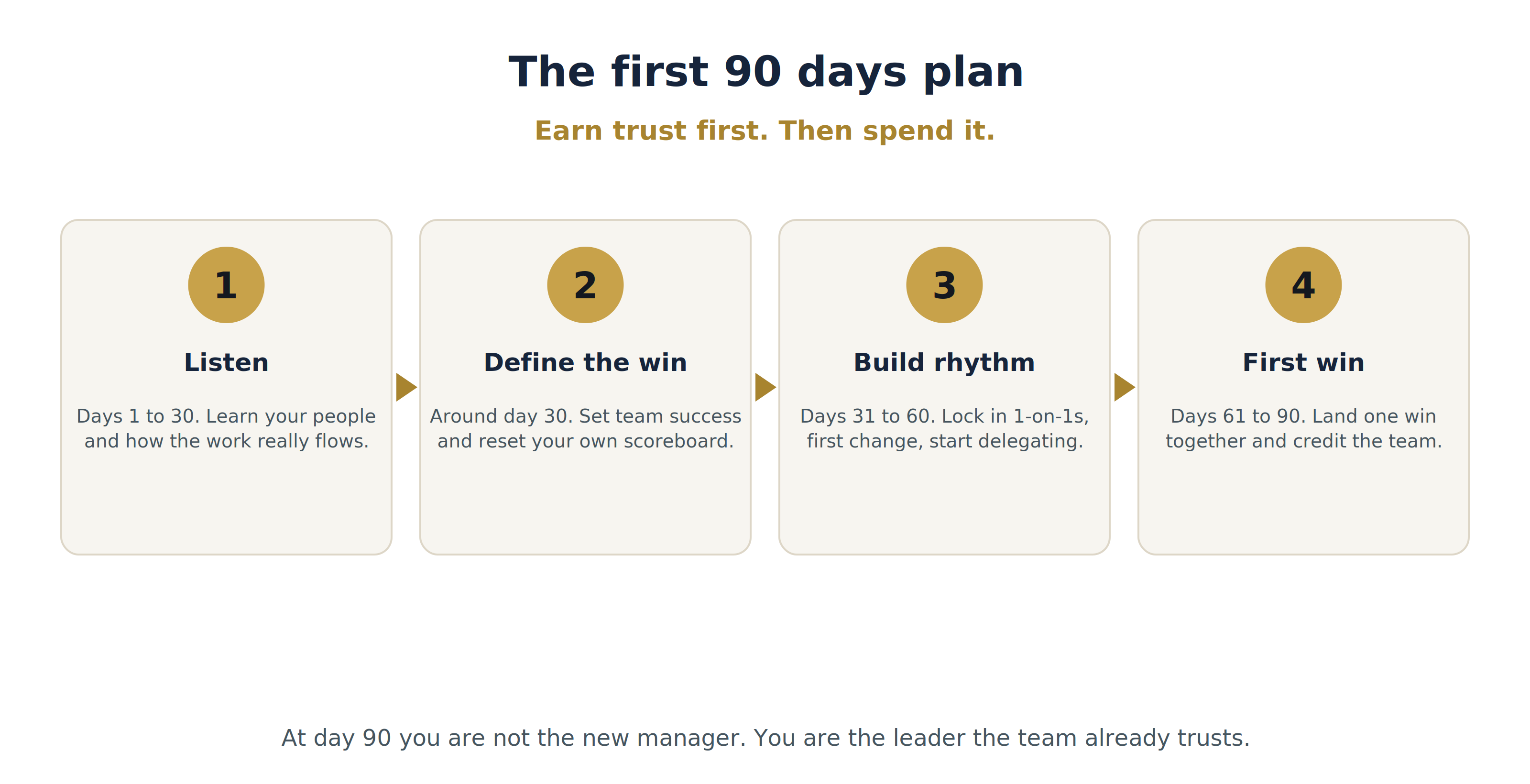
Here is the whole plan in one view. It is the same arc I walk new managers through in the Professional coaching program.
Do this, and at day 90 you are not the new manager trying to prove yourself. You are the leader the team already trusts.
In your first 90 days right now?
Book a free 10-minute call. We will build your 90-day plan around your team and the win you want to land first.
Book a free 10-minute callQuick answers
- What should I do first as a new manager?
- Have a goals conversation with each person. Learn their strengths and ambitions before you change anything.
- Should I make changes right away?
- No. Hold your changes for the first month. You cannot fix what you do not yet understand, and early changes burn trust.
- When should I start making changes?
- Around days 31 to 60, and start with something your team already told you was broken so the change builds trust.
- What is a good first win?
- One visible, achievable goal the team can land together inside 30 days, credited to the people who delivered it.
- How important are one-on-ones?
- They are the engine of a team. Protect them. They should be the last thing you cancel, not the first.
- How do I measure my own success now?
- By your team's results and growth, not your personal output. That is the manager's scoreboard.
- What if I inherit a struggling team?
- Listen even harder. Understand why before you act, then make one visible improvement with them early.
- How do I avoid overwhelm in the first 90 days?
- Protect time to lead, keep your one-on-ones, and resist doing the work yourself instead of coaching it.
Frequently asked questions
What should a new manager do in the first 90 days?
What is the biggest mistake new managers make early on?
How soon should a new manager start making changes?
What does a good first 90 days win look like?
How do I set up one-on-ones as a new manager?
Can a coach help me through my first 90 days?

Branden Bodendorfer is a business and leadership coach and the creator of the Key2Success Planning System. He coaches new managers through their first 90 days and beyond, helping them listen first, redefine the win, and build teams that carry the torch. See his coaching programs.