

How to Build a High-Performing Sales Team
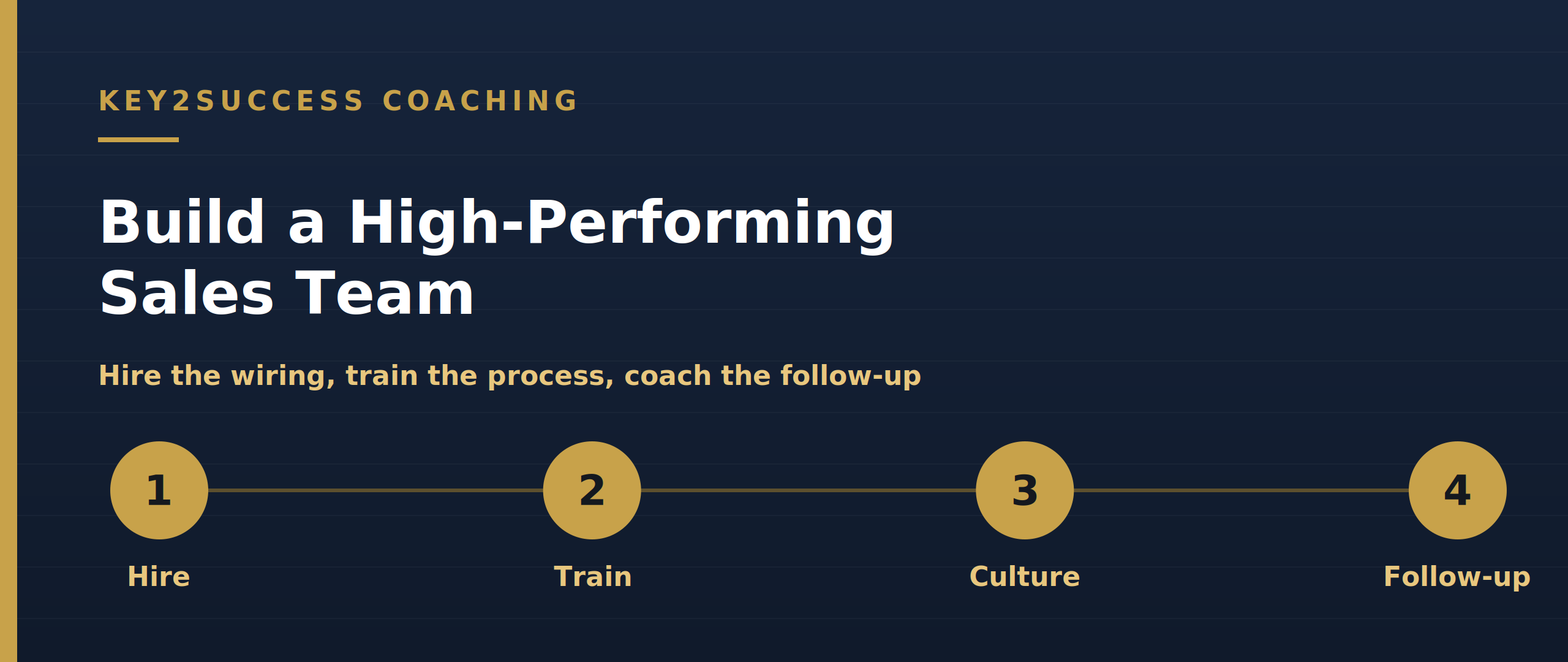
Ask what separates a high-performing sales team from an average one and people reach for one answer: hiring, pay, culture, or process. After coaching sales directors, managers, and reps on the floor and the phones, I can tell you it is not one thing. It is hiring for the right wiring, then training a repeatable process on top of it, protecting the culture from its own incentives, and drilling the follow-up most teams abandon. Here is how the best ones are built.
Hire for the wiring, train the rest
Some people are wired to sell. They know how to communicate, hold a person's interest, and deliver on what the customer expects. You can see it early. I watched a kid at a card show sell a trading card by talking up the player, making the case that a rookie card was going to be a valuable investment, and closing the buyer at over 200 dollars. He mentioned to a friend that he had paid under 30 for it a week before. In the trading world they call that a flipper.
What matters is what that kid actually did. He held the customer's point of view, gave a value proposition, made the case for why to buy, and overcame the objections. That is instinct, and it is also trainable behavior. You hire for the natural communicator, and you build the rest.
And here is the freeing part: a great salesperson does not need to know every product and every detail. They need to know where to get the answer for the customer. Hire for the communication wiring, then give them the process and the tools.

Great salespeople are wired for it and trained into it. You hire the first part and build the second.
Teach the six-step sales process
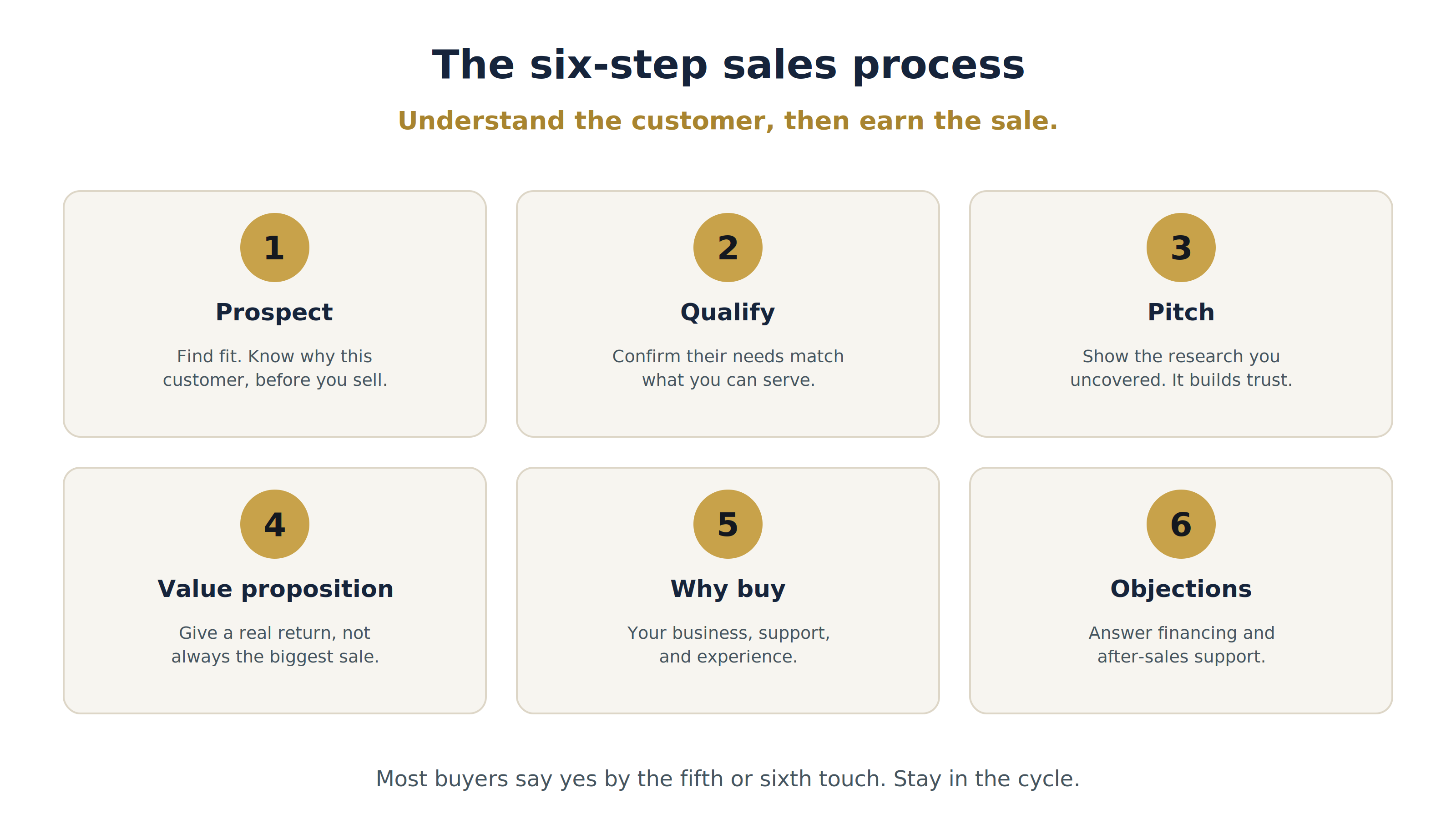
The biggest indicator of a successful salesperson is that they understand their customer. That understanding is not luck, it comes from running a process. This is the six-step process I coach, and it is the backbone of the CRM discipline in the Key2Success system.
- Prospect. Know why you are interested in this customer in the first place. Prospecting tells you whether they align with what you offer.
- Qualify. Learn the problem you might solve and confirm their needs match what you can actually serve.
- Pitch. Show them the information and research you uncovered while prospecting and qualifying. Done right, that homework builds real confidence.
- Value proposition. Give them a genuine return, the value that fits what they need, which is not always the biggest sale.
- Why buy. Educate them on why to buy from you: your business, your support, your experience.
- Objections. Answer the real hurdles, like financing and how they will pay, or the after-sales support they will need once they take it home.
Sell value, not the biggest ticket
The value proposition is the heart of it: provide a real return for the customer. This is also where salespeople get over their skis. When people chase the incentive or the commission and try to sell a customer past what they actually need, it backfires. Build a whole floor around that behavior and it will destroy the team, because customers tune out, stop trusting you, and stop seeing you as someone worth a relationship.
The reps who sell on value, who find what the customer actually wants and deliver it, are the ones who win over time. A smaller sale that fits beats an oversold one that erodes trust every single time.
Overselling to hit a commission does not win a customer. It teaches them not to trust you.
The number most teams miss
Every great salesperson knows they will not win every deal the first time. Sometimes it takes going back to the customer five or six times. Here is the pattern that has always rung true for me: the majority of buyers do not say yes until around the fifth or sixth touch, and yet most salespeople stop following up long before that, many of them quitting by the fifth call.
That gap is where deals are lost. Not to a better competitor, but to the follow-up that never happened. Every sale has a buying cycle, and a high-performing team is disciplined enough to stay in it until the customer is ready.
The sale is usually lost not to a better competitor, but to the fifth call your rep never made.
When customers come to you
Not every team gets to prospect. In the auto or tech world, customers often come to you, you are selling the same product, and there is no chance to prospect or qualify ahead of time. The process still works, you just run it in the room.
Lead with qualifying questions. Ask enough to learn what that customer actually needs, then shape the pitch and the value proposition around it. Same six steps, compressed into the conversation in front of you.
How to coach it as a leader
Whether I am working with a sales director, a sales manager, or someone on the phones and the floor, the job is the same: coach the process and the milestones, not just the monthly number. Make the six steps the shared language of the team. Use your CRM so every rep understands their customer and where each deal sits in the cycle. And set milestones for the behaviors that lead to sales, like touches and follow-ups, so people are measured on the work that actually closes deals over time.
Do that consistently and you get the compounding effect of a real team: reps who understand customers, sell on value, and stay in the cycle long enough to win. This is the same approach I coach in the Business Development program, and it pairs closely with learning to lead a team instead of doing the work yourself.
Building or rebuilding a sales team?
Book a free 10-minute call. We will map your hiring profile, your sales process, and the coaching rhythm that turns reps into a high-performing team.
Book a free 10-minute callQuick answers
- What makes a high-performing sales team?
- The right hires, a repeatable process, a value-first culture, and follow-up discipline. No single one is enough on its own.
- Should I hire for talent or train it?
- Both. Hire for natural communication, then train the process. The wiring is hard to teach, the process is not.
- Do reps need to know every product detail?
- No. They need to understand the customer and know where to get answers. Communication beats memorization.
- What is the biggest culture risk on a sales team?
- Incentives that reward overselling. Push customers past their real needs and you lose their trust and repeat business.
- Why do teams lose deals they should win?
- They stop following up too early. Most buyers commit after several touches, but most reps quit before that.
- How do I sell if customers come to me?
- Qualify in the room. Ask questions to learn their needs, then build the pitch and value proposition around them.
- What should I measure on a sales team?
- The behaviors that lead to sales, like touches and follow-ups, not just the closed number at month end.
- What is a value proposition in sales?
- The real return a customer gets from buying from you. It fits their need, and it is not always the biggest sale.
Frequently asked questions
How do you build a high-performing sales team?
Are great salespeople born or made?
What is the six-step sales process?
Why do sales teams lose deals they should win?
How do incentives hurt a sales team?
Can a coach help me build my sales team?
- Business and Leadership Coaching \xe2\x80\x94 the full library of guides
- How to Launch a New Product or Service
- When Is the Right Time to Hire a Coach?

Branden Bodendorfer is a business and leadership coach and the creator of the Key2Success Planning System. He coaches sales directors, managers, and reps on hiring, process, value selling, and the follow-up discipline that builds high-performing teams. See his coaching programs.