

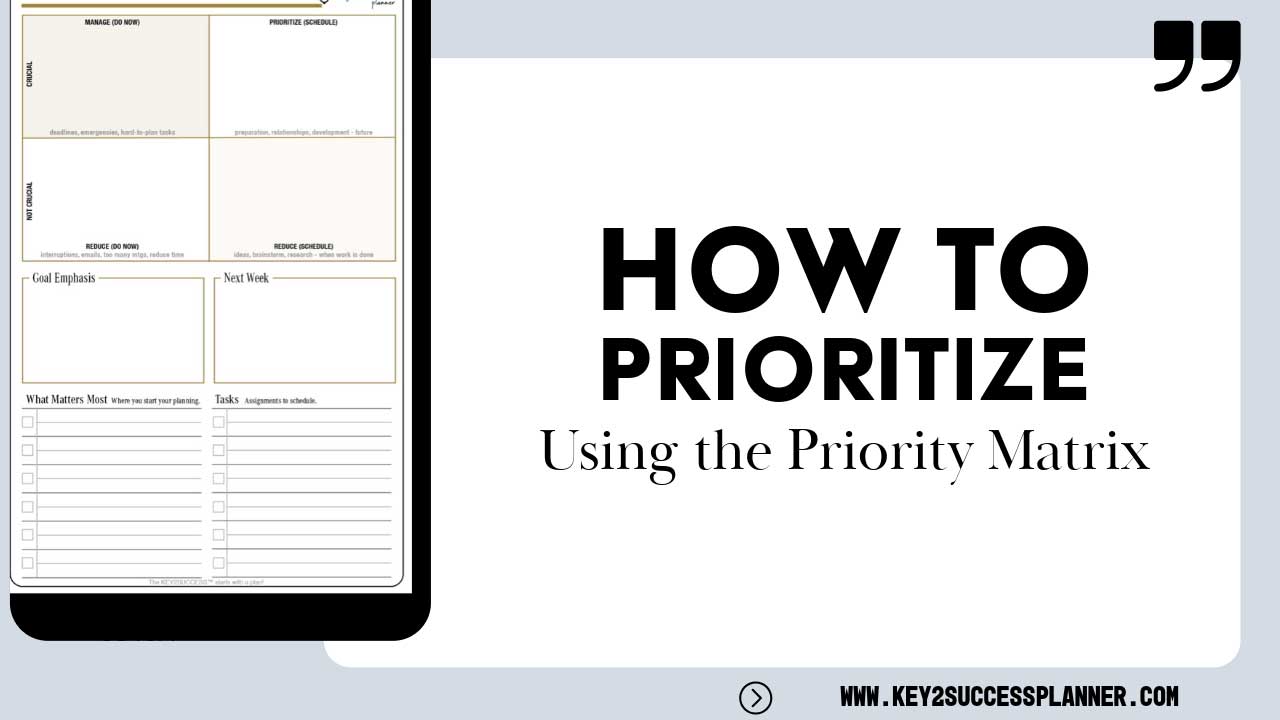
How to Prioritize Tasks Using the Key2Success Priority Matrix
Feeling pulled in many directions can make it hard to focus on what moves your goals forward. Many people struggle with how to prioritize tasks, especially when everything seems urgent. This is where a visual planning tool like the Key2Success Priority Matrix becomes useful. Found on the weekly page of every planner version, this matrix helps you decide what deserves your attention, what can wait, and what should be reduced.
Below is a practical walkthrough on how the Priority Matrix works, how to use it correctly, and why it aligns well with the classic Covey Time Management Matrix used by many professionals.
What Is the Key2Success Priority Matrix?
The Key2Success Priority Matrix is split into four quadrants that categorize tasks by urgency and importance. This makes it easier to organize your workload and plan your week.
1. Manage (Do Now)
Tasks here are both urgent and crucial. These include deadlines, emergencies, and items that require immediate attention.

2. Prioritize (Schedule)
These tasks matter to long-term goals but don’t require immediate action. Examples include preparation, planning, and strategic work that strengthens future success.
3. Reduce (Do Now)
This quadrant includes tasks that feel urgent but aren’t truly important. Handle them quickly or delegate them when possible.
4. Reduce (Schedule)
Tasks placed here are neither urgent nor crucial. Activities like research, brainstorming, or creative exploration can be scheduled for later.
How to Use the Priority Matrix to Boost Productivity
Start with “What Matters Most”
Use the section at the bottom of the matrix to write your top priorities for the day or week. This helps set direction from the start.
Assign Each Task to a Quadrant
Review your to-do list and ask two questions: Does this matter? Does it need attention right now? Your answers will guide where the task belongs.
Focus on Quadrants One and Two
The tasks in Manage and Prioritize drive results. Focusing here reduces overwhelm and keeps your time aligned with what matters most.
Use the Goal Emphasis Section
Write down your weekly focus to reinforce your goals and maintain clarity.
Look Ahead with the “Next Week” Box
This area helps you capture follow-ups or upcoming responsibilities so you are always ready for the week ahead.
Break Big Goals into Small Steps
Use the Tasks section to create actionable steps and assign them to specific days.
Why the Key2Success Priority Matrix Works
Tools like this do more than organize your schedule. They reshape how you think about your time. By sorting tasks visually, you gain a clearer view of what supports your goals and what drains your energy.
The matrix helps you:
- cut low-value activities
- stay focused on high-impact tasks
- balance urgent work with long-term planning
- reduce decision fatigue
- improve weekly consistency
This approach aligns closely with the widely used Covey Time Management Matrix, which also categorizes work by urgency and importance.